I've now posted 101 book titles, though I do not have 101 posts due to a couple of my posts containing information about a series. I haven't yet decided what I'm going to do with this blog from here on out. It will probably remain dormant for awhile as our lives have done the seemingly impossible and have grown to be even crazier than they were a year ago.
Whether or not I pick up posting about books again soon or in the much later future, I am going to continue to challenge myself to read 100 books every year. It is my hope to begin having my kids set their own goals for how many books they want to read each year when they get old enough to read on their own. Hopefully, the Vanderwall household will be filled with some great book talks for many years to come! If you've kept up with my blog, thank you, and I hope you found it to be meaningful and/or informative, at least a time or two.
Monday, September 8, 2014

If You Give a ______ a __________ Series (6 books)

If you Give a Mouse a Cookie by Laura Numeroff
These books are so popular, most people have heard of them, if not read them for themselves. We own 6 of them (which actually puts me at 101 books :)): If You Give a Mouse a Cookie, If You Give a Pig a Pancake, If You Give a Pig a Party, If You Take a Mouse to the Movies, If You Give a Moose a Muffin, and, my personal favorite, If You Give a Cat a Cupcake. There are more of these books, but I'm only listing the titles I've recently read.
The books are very simple and cute. They are easy for young readers to follow and a wonderful way to teach prediction in the classroom. They would also be a great way to teach beginning, middle, and end to young readers. All of the plots are straightforward, relate-able, and funny. Kids seem to eat these up!
Veggie Tales Series (4 titles)

Bob and Larry's ABC's by Phil Vischer
Noah has 4 different educational Veggie Tales books: ABC's, colors, opposites, and numbers. These short little reads are especially fun for kids who watch Veggie Tales and who know the characters. This is one of Noah's favorite ways to review all the aforementioned topics. He even pulls that out and "reads" them to himself every once in awhile. They are very small and lightweight, easy to take on the go.
Bedtime Stories Collection Book
I'm not listing a specific title here, but just giving a suggestion. Noah has a bedtime stories collection book that contains 16 titles, all classics. This book is really nice to have on hand for travelling - you can pack one book, but you don't have to endure the same bedtime story every night that you're away from home. Well, that is if you can talk your toddler into reading more than one of the stories which can be extremely different to do. I've learned this the hard way. Even though there are 16 titles in the book Noah has he won't let me read past the first 2: Goldilocks and the 3 Bears and Hansel and Gretel. And, if I'm being honest, I've only got to read Hansel and Gretel because I've forced my will upon him a time or two. I'm hoping that we'll eventually get through all the stories because there really are some in there that I'm aching to read!
Dream Big, Little Pig
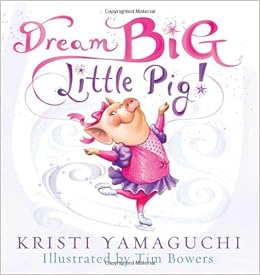
Dream Big, Little Pig by Kristi Yamaguchi
This is a really fun book to read aloud to your kids because it is written by an Olympian ice-skater: Kristi Yamaguchi. Some kids haven't heard of her, but when you tell them who she is and that she wrote the book they get extremely excited.
You get the impression that this little pig tells the true story of Kristi Yamaguchi and some of what she went through to get where she did with ice skating. It is a heart-warming story about never giving up and learning to lean on those you love the most.
13 Little Blue Envelopes

13 Little Blue Envelopes by Maureen Johnson
Virginia "Ginny" is a 17 year old from New York who has a crazy artist aunt. This aunt left to travel overseas with not so much as a goodbye and this upset Ginny a lot! They were so close. In the first few pages of the book you discover that Ginny's aunt has passed away from cancer, which makes a package arriving from her quite mysterious. Within the package are 13 little blue envelopes. Ginny quickly discovers she is about to go on the scavenger hunt of a lifetime and she's been given some money and very specific directions by her aunt. She isn't sure what the purpose is, but she loved her aunt and is ready to take this adventure on, no matter what she may encounter.
This book was a really easy read. It is 300+ pages, but it is a bit of a page turner and it uses language that is very easily understood. Even though this book is YA (17 year old protagonist, parents who are only mentioned a couple times who probably think they're the greatest parents of all time, but who obviously don't have much a of relationship with their daughter, romance, no time wasted getting to the plot) I would recommend this for middle grade readers as well - the content is very mild. I think that anywhere from 6th grade - 12th grade students would relate to this book and enjoy it. I would think it would particularly suit female readers as the protagonist is a female and it involves her crush - it is kind of like a "chick flick," but in book version.
There are a few content things to note, but I didn't find anything offensive about this book and, as I mentioned before, I wouldn't have a problem handing this to a middle school student. There is some profanity, but it is incredibly rare and very mild. Ginny meets a family overseas that she travels with for a few days. She learns that their daughter is a lesbian, but hearing the daughter say so is as far as that content goes. One of Ginny's other newly-made friends goes skinny dipping, but it isn't described in a graphic way. Ginny does have one Italian guy make try to make sexual advances, but he doesn't get very far. She also kisses her English crush a time or two. This crush does reveal a past of drugs and jail, he's turned his life around though.
The book is broken down in sections like chapters, but in between these chapters are the letters from Ginny's aunt. It makes you want to keep reading because you're always wondering what the next letter is going to say and what new destination Ginny is going to be whisked away to. Also, at the back of the book there is a section called "Extras." Inside these few pages you get to meet the author (Maureen Johnson), hear what she has to say about herself and the writing of this book, and read an interview with Ginny's English crush.
Yet again, (I feel like I've said this in most of my posts, but it has been true a lot), this book would make a good read aloud. It would easily capture and hold the attention of students. I could also see it being used in a social studies class or even a geography class during a unit on different cultures or different countries - Ginny experiences a lot of these along the way. The author leaves the book a bit open-ended so students in an English class could be assigned the task of writing the end of this novel.
Keeping the Moon

Keeping the Moon by Sarah Dessen
This Contemporary Realistic Fiction book is about 15 year old girl, Colie (short for Nicole), who is sent to live with her aunt for the summer while her mom is overseas for work. Colie has had more than her fair share of struggles in life. She was raised by a single parent, both her and her mom were obese until her mom got a job at a gym and became famous for her classes and infomercials, and product line, etc. Colie's never had any real friends and she's been made fun of at every school she's ever attended (which has been a lot because before becoming skinny, rich, and famous, Colie's mom would move her around from state to state to try and escape their problems of no money, no friends, and obesity). During Colie's stay with her aunt she learns a lot about herself, makes some friends, and begins to transform her life. She realizes she was always capable of being a likable, fun girl and that she needed to have some confidence in herself in order for others to see that as well.
Novel is the style of this book. There aren't any abnormal formatting choices to note. It is written in first person all the way through. In the very front of the book there is a printed excerpt taken from the book. It doesn't have a heading or anything so I thought I might be reading an excerpt from one of Sarah Dessen's other books, but I found out I was wrong. The back of the book does give a preview of one of her books that came out after Keeping the Moon.
Classroom applications for this book could take a few different forms. It could certainly be used during an anti-bullying campaign, even just as a book in a literature circle. I think it could really encourage some kids who feel that they don't have friends and maybe don't have a lot of support at home. It could be used in a unit on friendship as well.
Big Chickens Go to Town

Big Chickens Go to Town by Leslie Helakoski
This book is very similar to Big Chickens (see my previous post) only it is placed in a different setting. It is just as hilarious and clever. Still a must-read!
Big Chickens

Big Chickens by Leslie Helakoski
One of my college professors read this book aloud in one of my classes. I don't know if it was the way she read it that made me love this book so much or if the story line is just that funny, but it has been one of my favorites for several years.
Four chickens are on a journey and at every point along the way they continuously realize what chickens they are - everything scares them! Alas! How easily they forget this. As soon as they "conquer" a fear they are on cloud 9, thinking they are the biggest, baddest chickens around, until they happen into the next "scary" circumstance.
The dialogue between the chickens is what makes this book. Such clever writing! You really need to read this one!
Dog Heaven

Dog Heaven by Cynthia Rylant
If I'm being honest, this is one of those books that makes me extra thankful for the library. We checked it out, brought it home, and only read it once in the 3 weeks we had it because neither Noah or I really liked it.
Overall, I found the tone of the book to be too sad. That being said, it might be just the thing that a pet lover would need after losing a beloved friend. It suggests that dogs get to experience many wonderful things and places in "dog heaven" where they are very happy after they leave us. Kind of strange in my mind, but I know some people use similar explanations for the children if their family pet dies.
I won't recommend this one, but if you'd like to try it out, be my guest.
Mr. Finnegan's Giving Chest
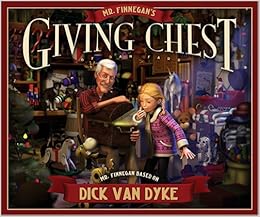
Mr. Finnegan's Giving Chest by Dan Farr
This is another yard sale find of ours. When I was little my mom always had this special basket of books that she would only pull out around Christmas time; books that contained, in one form or another, the story of Christmas. I've been working to establish this same sort of collection for my own kids and when I happened along this one, I knew I had to have it.
Mr. Finnegan's Giving Chest does, lightly, parallel the Gospel Christmas story. It teaches selflessness, giving, and tender care for others who don't have much of anything or anyone in their lives. It is a touching story of a couple of kids who are taught by Mr. Finnegan (Dick VanDyke) how to think of others before yourself and how to give with all you've got. It is a beautiful book with gorgeous pictures and a wonderful story line to match.
Geraldine's Baby Brother

Geraldine's Baby Brother by Holly Keller
Similar to Arthur's Baby this book is a great read for a family who has welcomed a new baby into their home. While Arthur's Baby is something I might read to kids who have an expectant Mommy, Geraldine's Baby Brother is something I'd read to kids who have recently had a baby brother or sister brought into their home.
Geraldine really can't stand her baby brother. After all, he is constantly whining and stealing the attention of every adult in her life. Her routine and home seem ruined and she's sick of it. Until, one night, she begins to form her own little relationship with her little brother and begins to realize he isn't so bad after all.
Spike the Mixed-up Monster
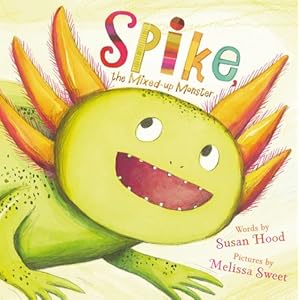
Spike the Mixed-up Monster by Susan Hood
Spike has made up his mind that he is a ferocious monster and he expects all those around him to quake in their boots upon the sight of him. So, you can imagine his frustration when all the other animals call him "cute." He begins to feel a little confused and isn't sure where his true identity lies. Eventually, he gets it figured out and finds himself to be completely content with his reality.
This fun read introduces some exotic characters (for which there is a glossary) as well as a few Spanish terms. Partly educational, partly just plain fun. Kids will get a kick out of this one!
Arthur's Underwear
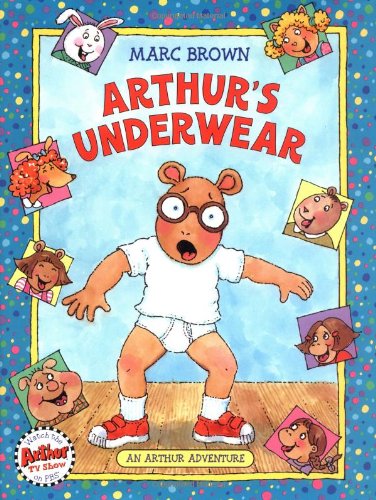
Arthur's Underwear by Marc Brown
Noah doesn't love this one quite as much as Arthur's Baby, but it really does come in as a close second. Arthur's worst nightmare comes true - his pants rip at school and some of the kids see a bit of his underwear. He doesn't know how to handle the situation, but decides it is probably best to tell his parents that they need to move so he can switch schools.
We've all been there, especially as kids. That moment of total embarrassment when your only thought is wishing for the floor to magically open up and to swallow you. This story shows that embarrassing things happen to everyone and that eventually, people will forgot about it and you'll feel better.
Arthur's Baby
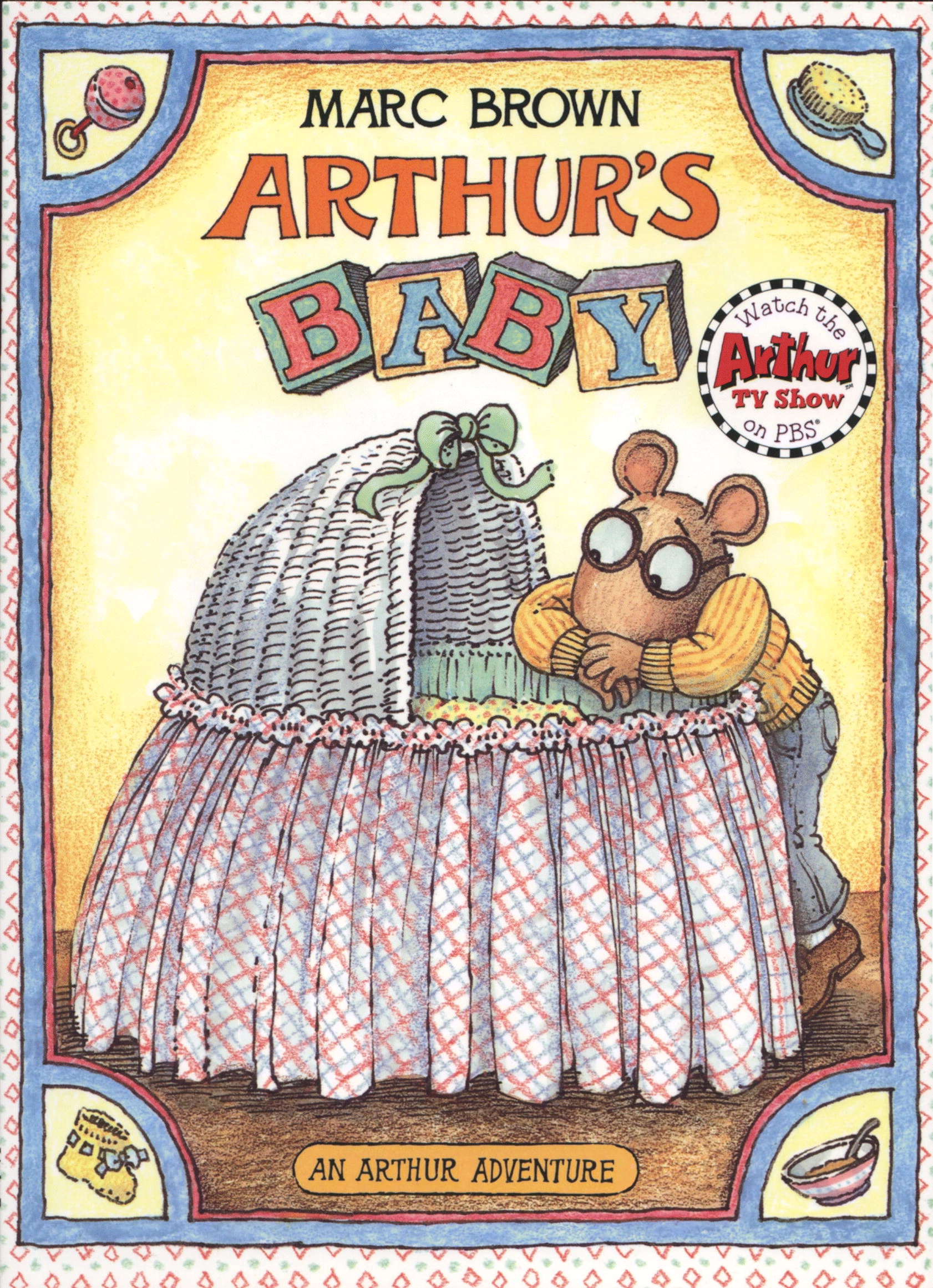
Arthur's Baby by Marc Brown
Noah has fallen in love with Arthur books, which is kind of interesting considering he doesn't watch the show. This summer we found several Arthur books at yard sales and used book stores, which made him very happy.
This book would be a perfect read for someone like us - a family who is getting ready to welcome a new baby into their home. Arthur learns what it means to be a big brother to a little baby and he learns how to jump in and help his mom when she's first home from the hospital. It covers an array of emotions from dread to excitement and explores the transition a child can expect to face with a new baby on the way.
Noah loves this book and for good reason!
Ballyhoo Bay

Ballyhoo Bay by Judy Sierra
This is one of my favorite classroom reads every year. This book teaches a great lesson about being environmentally conscious without going over board and being too "love the earth-y," if you know what I mean.
Mira Bella, an artist, and all her animal friends work hard to save the beach at Ballyhoo Bay when they learn that some builders intend to plop an apartment complex right there on the sand. The persuasion they have with the city council is shown tastefully and respectfully. The vibrant pictures and the rhyming story line make for an enthralling, irresistible read.
The Block Mess Monster

The Block Mess Monster by Betsy Howie
No, that's not a typo and yes, it is an intentional play on words - more of those can be found within the pages of this cute read. The little girl in this book really hates to pick up her toys and she feels that her mom just doesn't understand and that she's always ruining her creations. In the end, the mom wins, just as it should be in real life.
This book is full of imagination and leaves some guess work for older readers. It teaches the lessons of both obedience and compromise.
Snippet

Snippet by Bethanie Deeney Murguia
This is another fun library find. Snippet is an adorable little snail who happens to be quite opposite of all the other snails in his family; he's an early riser, and they are all night owls, or maybe I should say night snails ;) He works so hard every day to wake them up because he really wants them to play with him. By the time he rouses them he begins to feel sleepy and soon finds himself in bed. It's a viscous cycle, really.
The bright pictures and cute little animals found in the book are sure to be a hit with toddlers!
ABCer's
Ok, I apologize. This book (ABCer's) was a library book that I returned several weeks ago and I haven't been successful in finding a picture of the cover or the author online. However, I still wanted to post it because it is the book that taught Noah his ABC's. We have several books that teach the ABC's and I even created a game for him to do the same thing. He also has a couple of foam puzzles that contain the alphabet, but, for whatever reason, this is the book that did it for him.
If you're looking to work on the alphabet with your child, whether it be to begin to teach them, or to strengthen their current knowledge, I'd look for this book. It is really simple, really straightforward, and only takes a couple minutes to read. We read it every night before bed time for about 2 weeks and he had his alphabet down. Again, I apologize for the lack of information I'm providing you with, but maybe your local librarian can help.
If you're looking to work on the alphabet with your child, whether it be to begin to teach them, or to strengthen their current knowledge, I'd look for this book. It is really simple, really straightforward, and only takes a couple minutes to read. We read it every night before bed time for about 2 weeks and he had his alphabet down. Again, I apologize for the lack of information I'm providing you with, but maybe your local librarian can help.
Saggy Baggy Elephant

The Saggy Baggy Elephant by Gustaf Tenggren
I remember reading this book at my Great Grandma's house when I was a little girl. Someone at our church had cleaned out a bookshelf and was going to throw away a pile of books and I found this in it. I decided to bring it home for Noah and hoped he'd like it as much as I did. Turns out, he does.
This cute, short little story teaches kids that it is okay to be different, especially when being different means being yourself. It also preaches a message of anti-bullying. It is a quick, easy read, ideal for a bedtime story. Something most little ones will certainly enjoy.
Mary Poppins
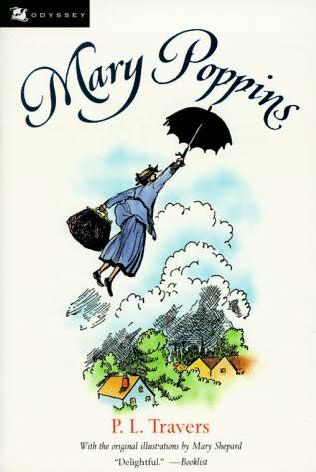
Mary Poppins by P.L. Travers
Ok, so I have to admit that a movie sucked me into a book. It isn't often that this happens. In fact, it is usually the other way around - I read a book, like it, and sometimes opt to see the movie when it comes out, which typically ends in grave disappointment. This time, however, was so different.
If you have not yet watched Saving Mr. Banks (the movie that tells the story of the making of the Mary Poppins movie) you must change that at your earliest convenience! It is a must-see! I wasn't entirely sure what to expect, but I LOVED it. After watching the movie I realized that while I loved the Mary Poppins movie as a kid, I did not recall ever reading the book. I thought that needed to change. Immediately. I quickly ordered the book on Amazon and spent the next few weeks reading it (it could be read in one sitting, but I couldn't find the time).
As enthralled as I was with Saving Mr. Banks and Mary Poppins, the movie, I was equally disappointed with the book. Perhaps, if I'd read the book first it would be the other way around, but somehow I doubt it. The Mary Poppins that is portrayed in the book is a lot harsher and less likable than I ever remember her being in the movie. There are also some parts of the book that really make you feel like you've entered the twilight zone...just plain weird. Now, I know that P.L. Travers was a bit of a character herself and that this book contains some pieces of truth from her own story, but I just didn't love it.
All in all, I still think everyone should read this book at some point in their lives and I think that every person who doesn't see Saving Mr. Banks is committing an unforgivable sin.
Saturday, June 28, 2014
Miss Nelson is Missing

Miss Nelson is Missing by James Marshall
If you are a teacher and you've never read this book you need to drop EVERYTHING and read it NOW!!!!
Miss Nelson is a sweet teacher who loves her kids and her job, but her class is completely unruly. She can't seem to get control of them and they are just rude and disrespectful. She decides to take matters into her own hands and appears as the meanest substitute in the whole wide world, Miss Viola Swamp! The greatest part is that she keeps her true identity hidden from the kids and manages to accomplish her task of turning the behavior of her class around at the same time.
Every year I have at least one day where I think, I really need an alter-ego who can turn the behavior of this class around! Maybe I'll have to give Miss Viola Swamp a try sometime.
Miss Nelson has a Field Day

Miss Nelson has a Field Day by James Marshall
The same Miss Nelson from Miss Nelson is Missing returns in this hysterical book! When the football team at Miss Nelson's school is completely falling apart and their coach is taken sick with the measles, Miss Nelson decides something has got to be done to keep them from being embarrassed by their biggest rivals in the Thanksgiving Day game. Without wasting a moment, Miss Nelson brings back "The Swamp" and whips these boys into shape just in time.
I don't know if I appreciate these books as much as I do because of being a teacher or if they really are just that good, but I have a hunch it's the latter.
Henry Huggins

Henry Huggins by Beverly Cleary
Beverly Cleary is one of my all time favorite children's authors. Her Henry Huggins and Ramona Quimby collections are two that I will always treasure and can't wait to share with my own children.
I used this book as a read aloud for my Kindergartners. It is a 3rd or 4th grade level book, but using it as a read aloud gave them the opportunity to enjoy a more intricate story line than most of the books they are used to reading. They loved it!
In this first Henry book he finds a stray dog and adopts him. He names him Ribsy because he was so thin when Henry found him that his ribs were showing. The whole book follows Henry and Ribsy on their adventures and all the trouble they get themselves into. It is funny, cute, and even nail-biting in some instances (especially for Kindergartners)!
Big Wolf & Little Wolf

Big Wolf & Little Wolf by Nadine Brun-Cosme
Big Wolf & Little Wolf find a beautiful orange that they both want. They are the perfect example of sharing friends, but in an unfortunate turn of events they get separated and nothing matters anymore except finding each other, not even the beautiful orange. Once they are reunited they realize that only one thing matters to them and that is being together.
Hmmm...I'm not exactly sure what to write about this book. The illustrations are outstanding and the message taught by the book is a good one, but the book itself is a little strange - there seem to be a couple plot holes or something, something I can't quite put my finger on.
A Pig Tale
A Pig Tale by Helen Oxenbury 
This was a great library find of ours! In fact, I loved it so much I'm considering buying it for our personal collection.
These 2 pigs are so bored with their day-to-day lives in the sty and they have great dreams of moving on to greener pastures. They'd love to strike it rich and be able to live in a fancy house, drive a fancy car, and wear fancy clothes. All their dreams come true when they dig up a chest full of jewels in their pen one day. The only problem is that once they're living the dream, they realize they hate it and only want their old, simple lifestyle back.
This is a great book to help kids learn about being content and thankful for what they have. It also does a nice job of teaching the lesson that sometimes things look more enticing than they actually are.
This was a great library find of ours! In fact, I loved it so much I'm considering buying it for our personal collection.
These 2 pigs are so bored with their day-to-day lives in the sty and they have great dreams of moving on to greener pastures. They'd love to strike it rich and be able to live in a fancy house, drive a fancy car, and wear fancy clothes. All their dreams come true when they dig up a chest full of jewels in their pen one day. The only problem is that once they're living the dream, they realize they hate it and only want their old, simple lifestyle back.
This is a great book to help kids learn about being content and thankful for what they have. It also does a nice job of teaching the lesson that sometimes things look more enticing than they actually are.
Curious George
 H.A. Rey
This post is in honor of my 2 year old son, Noah. He is Curious George's biggest fan and loves all things to do with him - movies, tv show, books, toys, etc.
Noah owns quite a collection of Curious George books - I think 9 in all - and also checks one or two out every time we go to the library, about twice a month. We've read most of them so many times that I'm pretty sure I could recite them from memory. Even with that being said, they are really cute, fun stories.
All of these stories have really withstood the test of time. They were written in the 40's and they are still as popular as ever. The plots cover a variety of events, but always start the same way:
"This is George. He was a good little monkey and always very curious...."
Tikki Tikki Tembo
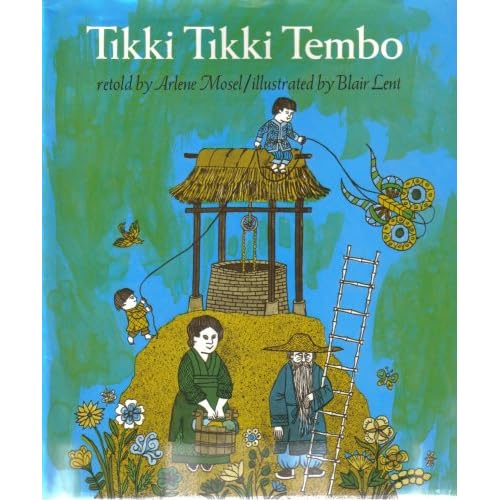
Tikki Tikki Tembo retold by Arlene Mosel
This is a book that is quite well-loved by all the kindergarten students I've ever taught. It is one that we read and re-read all year long.
Tikki Tikki Tembo tells the story of 2 Chinese brothers who like playing by a well, despite their mother's warnings not to. They both end up falling into the well at one point or another in the story. Due to an old Chinese tradition, the first born son is always given a very long name, bringing honor to him. Tikki's full name (which you'll have to read the book to learn of) causes him to stay in the well for too long because his younger brother has to keep repeating this gigantic name to try and get someone's help. After this, the Chinese stopped using long names.
The Rain Came Down
 The Rain Came Down by David Shannon
This author/illustrator is just so darn creative! I've never read any of his works that I haven't enjoyed and my 2 year old feels the same way!
In this simple little story the rain makes all the people and animals grouchy and everything seems to be going wrong. The sun coming out is like someone waving their magic wand - all peace and order return to this quaint little neighborhood and everyone is happy again.
The pictures in this book are absolutely breath-taking!
How I Became a Pirate
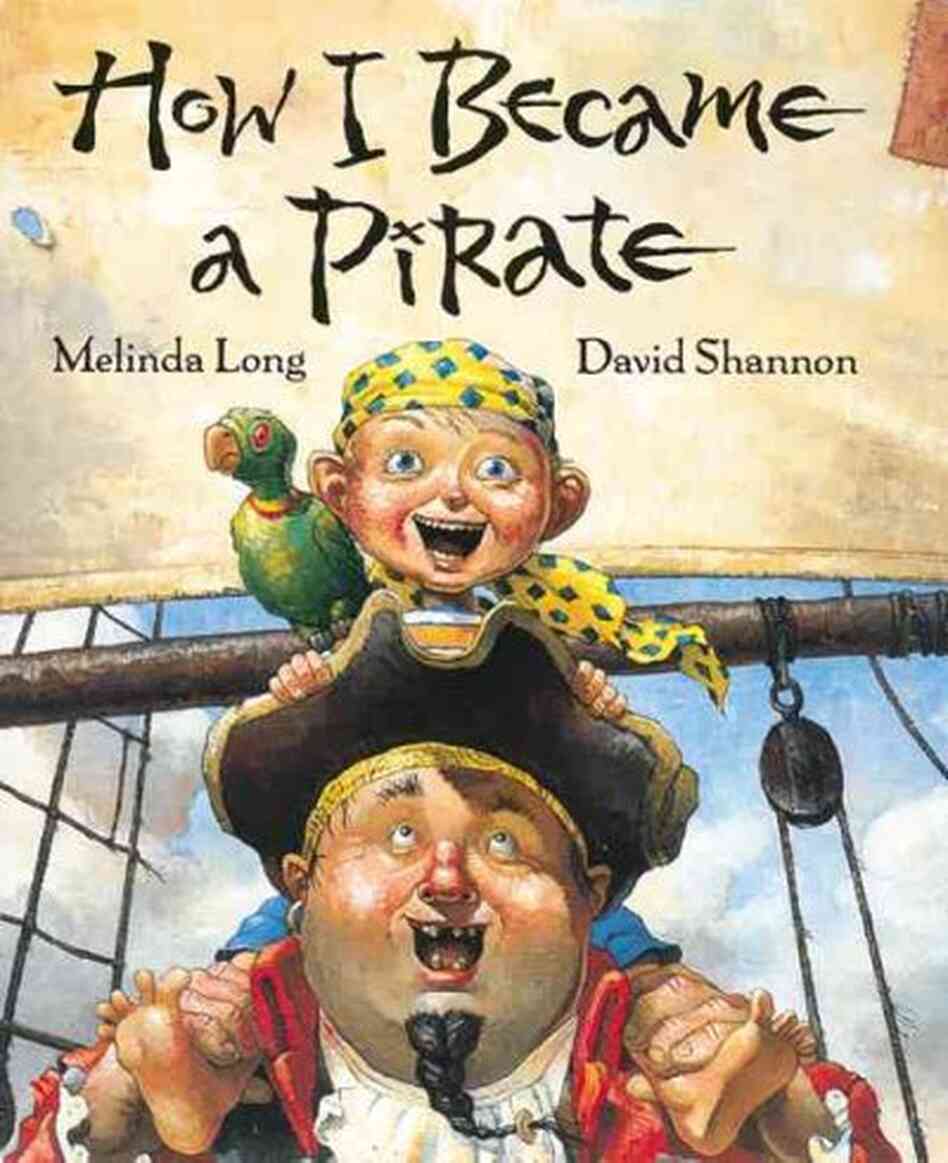 How I Became a Pirate by Melinda Long
This is one of the first children's books that I remember falling in love with as an adult. I read it for the first time in college and I not only loved the story line, but the pictures as well. I've since come to love much of David Shannon's (illustrator) work.
Jeremy Jacob wants to become a pirate and he has just that chance. At first it is everything he's dreamed it would be, but he quickly decides maybe it wasn't the best vocation after all. I mean, no bed time stories? no goodnight kisses? no toothbrushes? and always having to swab the poop deck? No thanks! The author creatively tells this plot and writes in such a witty way that at the end you're left wondering if Jeremy Jacob actually did all these things or if it was all his imagination. Another prime example of children's literature that is meant to be enjoyed by adults as well.
Moosetache
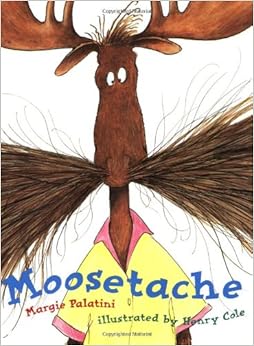 Moosetache by Margie Palatini
This comical read is great for adults and children alike! Moose has a serious problem - his moosetache. It is taking over his life and he has tried potential solution after solution, but to no avail. His luck turns when, one day, he bumps into the most beautiful moose he has ever seen with the most bodacious bouffant he's ever seen. Once he learns her secret for controlling all that hair and he tries it himself, the rest becomes quick history. They control their hair and fall in love all at the same time.
This book is sure to bring about some of those precious little giggles that are so fun to hear!
Alexander and the Terrible, Horrible, No Good, Very Bad Day
Alexander and the Terrible, Horrible, No Good, Very Bad Day by Judith Viorst

Every person to ever walk the face of this earth, no matter how old or young, can certainly relate to this book! We've all had those days where nothing seems to go right and all we want is to be able to crawl back in bed and pull the covers over our heads, or perhaps even better, "move to Australia," as Alexander would put it.
Every person to ever walk the face of this earth, no matter how old or young, can certainly relate to this book! We've all had those days where nothing seems to go right and all we want is to be able to crawl back in bed and pull the covers over our heads, or perhaps even better, "move to Australia," as Alexander would put it.
Alexander Who Used to be Rich Last Sunday
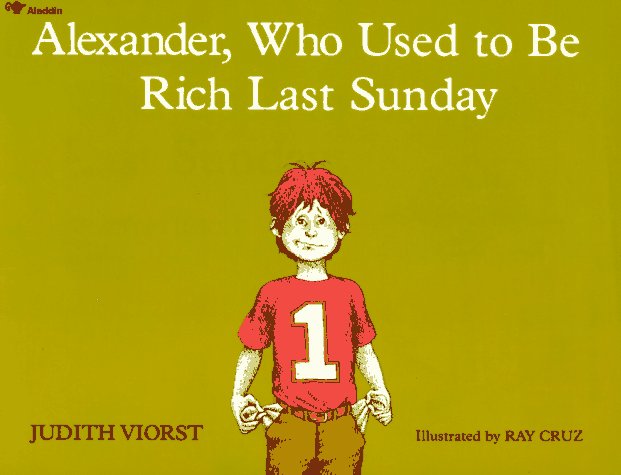
Alexander Who Used to be Rich Last Sunday by Judith Viorst
If you're a fan of Alexander and the Terrible, Horrible, No Good, Very Bad Day you'll definitely like this book! Alexander shares his woes of being a child and having a very limited income. When he does get some money he finds so many irresistible things to spend it on and he just can't control himself. Pretty soon, he only used to be rich and tries his best to think of ways to find/earn more money.
I love reading this author because she does a great job of making her stories something kids love, but she also includes humor for the moms and dads and teachers who are forced to read these favorites time and time and time and time and time and time and time again.
Maybe You Should Fly a Jet
 Maybe You Should Fly a Jet by Theo LeSieg
When I came across this book in a local used book store I just had to get it! I remember reading this book at my Grandma's when I was little and I'm just a sucker for nostalgia.
There really isn't a plot line in this story, but it is still a fun one for younger kids. It lists many occupations, in rhyming format, and has pictures to go with each. It's a fun way to get kids talking about what they want to be when they grow up.
Arthur Babysits
Arthur Babysits by Marc Brown 
This is one of Noah's favorite books! Arthur gets roped into babysitting the terrible Tibble twins by none other than his bossy little sister D.W. After hearing the haunting stories of the way they've treated their previous babysitters, Arthur isn't so sure he wants to go through with this plan. However, in the end, he decides it wasn't that bad after all. He even agrees to babysit them on a regular basis and turns the tables on D.W. by making her help him.
If your kids like(d) watching the Arthur show they will definitely love this book!
This is one of Noah's favorite books! Arthur gets roped into babysitting the terrible Tibble twins by none other than his bossy little sister D.W. After hearing the haunting stories of the way they've treated their previous babysitters, Arthur isn't so sure he wants to go through with this plan. However, in the end, he decides it wasn't that bad after all. He even agrees to babysit them on a regular basis and turns the tables on D.W. by making her help him.
If your kids like(d) watching the Arthur show they will definitely love this book!
Love and Leftovers
Love and Leftovers by Sarah Tregay 
This is another required read from my YA lit. class. The author actually lives locally and she was a guest speaker during one of our class sessions. It was really interesting to get her insight.
This book is written in verse and it is the first book I've ever read in verse. I really enjoyed that format. I found myself wondering how the story could be complete when the amount of words were so limited, but the plot did not lack anything.
The main character of this book is a teenage girl who moves to New Hampshire, from Boise, with her mom one summer when her parents decide to get divorced. It tells her story of the awkward teenage years (well, of a couple months at least) and the feelings and struggles teenagers have with friends, relationships, parents, school, etc.
While I did enjoy this book overall, there are some things about it that some people might find to be offensive. There is some language, the teenage girl's dad sends her a care package at one point that is filled with condoms, her parents were divorced because her dad decides he is gay and starts living with his partner, and there are a couple of teenage make-out sessions and talk of sex.
As I said, the plot is very enjoyable, it is fun to read because the author talks about a lot of local places that are easy to picture, and it is a well-written book. Each reader will have to decide for themselves if some of the content makes them uncomfortable.
This is another required read from my YA lit. class. The author actually lives locally and she was a guest speaker during one of our class sessions. It was really interesting to get her insight.
This book is written in verse and it is the first book I've ever read in verse. I really enjoyed that format. I found myself wondering how the story could be complete when the amount of words were so limited, but the plot did not lack anything.
The main character of this book is a teenage girl who moves to New Hampshire, from Boise, with her mom one summer when her parents decide to get divorced. It tells her story of the awkward teenage years (well, of a couple months at least) and the feelings and struggles teenagers have with friends, relationships, parents, school, etc.
While I did enjoy this book overall, there are some things about it that some people might find to be offensive. There is some language, the teenage girl's dad sends her a care package at one point that is filled with condoms, her parents were divorced because her dad decides he is gay and starts living with his partner, and there are a couple of teenage make-out sessions and talk of sex.
As I said, the plot is very enjoyable, it is fun to read because the author talks about a lot of local places that are easy to picture, and it is a well-written book. Each reader will have to decide for themselves if some of the content makes them uncomfortable.
The Absolutely True Diary of a Part-Time Indian
The Absolutely True Diary of a Part-Time Indian by Sherman Alexie 
This book has raised a lot of questions and is certainly considered to be controversial. With Meridian school district recently banning it, it has received a lot of press time. This was one of the required reads for the YA lit. class I'm taking at Boise State. While you'll notice in my post that I did find the book to have a lot of redeeming qualities about it, I would probably not recommend it to many (if any)....it is a good book, but my moral compass points me away from it, in some instances. Read my post and decide for yourself if it is something you'd like to read and/or something you'd give your teenager to read.
I have a lot of mixed feelings about this read and the situation in Meridian. On the one hand, I found the book to have many redeeming qualities. While I could not personally relate to many of the topics this book centers around I know a lot of kids who can: bullying, poverty, growing up in a small community, living in a place where your future is basically decided for you (not for Junior, but for most of the rez kids), seeing the ugly side of alcohol. There were also points that really did resonate with me. Things like a close-knit family, loyalty to friends and family, and having dreams and wanting to make something of oneself. This read contains so many points of contention that aren't always talked about in our society that are REAL life for kids, day in and day out and I think that some students would find a great deal of comfort in being able to relate to Junior and his story.
On the flip side of that, as a parent, if my 15 year old came home from school with this book and told me that they were reading it for class I would not be happy. While I am not trying to deny the fact that kids deal with things I have never dealt with in my life, that our world is an ugly and scary place, that (many) teenagers are already discussing these topics on their own, I am saying that I believe it to be important to have our minds (especially the minds of our kids) dwelling on wholesome things. As a parent, I am not scared to have conversations about these things with my child. In fact, I believe it is VITAL that I do, because of the world we live in. However, I don't see the need for having these topics (masturbation, pornography, alcoholism, etc.) present in the things my children are reading or watching. I already know that I will probably be considered by many to be a parent who shelters their child, but that isn't my aim. I am going to be particular about the things my children view and read, but I realize they will have friends and go to school and be exposed to many things I don't approve of. That is the reason I'm not going to pretend these things don't exist. We will discuss them. My kids will be aware. They will be knowledgeable, but they don't need to fill their minds with the types of things that they shouldn't want to fill their lives with either.
Maybe Meridian school districts efforts should be applauded? Maybe they are trying to think about the future and help to put off the degradation of society as they see fit. Maybe it is a way bigger issue than just banning this one title? Just something to think about.
As far as what Megan Cox Gurdon wrote, I agree and disagree at the same time. Books can be a great outlet for kids who don't have supportive adults in their lives. Especially those kids who have to face things every day that most of us would never consider having to deal with. That being said, my mind keeps coming back to one point in all of this and that point is the degradation of society. I keep thinking, "If I deem it appropriate for my 15 year old to be reading about masturbation and pornography and sex and drugs and expletives, etc., what is going to be deemed appropriate material for my grand kids to be reading/viewing when they are 15?" Unfortunately, our world is only getting worse. 15 is the new 30 and in 10 years 8 is going to be the new 20. Not in a good way.
***Note: this book and the articles we read have really got me thinking. I think it has to kind of be "to each their own". While I previously mentioned not wanting my kids to fill their minds with things that they shouldn't fill their lives with, I don't feel as strongly about some other topics of contention (e.g. you could say I shouldn't let my kids read books about superheroes because they are filled with crime and villains, but I don't have a problem with superheroes at all...)I don't know. I think books and movies and the things we let our kids fill their minds with have to be considered one at time, depending on the child and their age, and what the parent feels to be best. I do know I don't have all the answers, but I want to be the best parent I can be for my children and I am doing my best to learn what that looks like as I go.
This book has raised a lot of questions and is certainly considered to be controversial. With Meridian school district recently banning it, it has received a lot of press time. This was one of the required reads for the YA lit. class I'm taking at Boise State. While you'll notice in my post that I did find the book to have a lot of redeeming qualities about it, I would probably not recommend it to many (if any)....it is a good book, but my moral compass points me away from it, in some instances. Read my post and decide for yourself if it is something you'd like to read and/or something you'd give your teenager to read.
I have a lot of mixed feelings about this read and the situation in Meridian. On the one hand, I found the book to have many redeeming qualities. While I could not personally relate to many of the topics this book centers around I know a lot of kids who can: bullying, poverty, growing up in a small community, living in a place where your future is basically decided for you (not for Junior, but for most of the rez kids), seeing the ugly side of alcohol. There were also points that really did resonate with me. Things like a close-knit family, loyalty to friends and family, and having dreams and wanting to make something of oneself. This read contains so many points of contention that aren't always talked about in our society that are REAL life for kids, day in and day out and I think that some students would find a great deal of comfort in being able to relate to Junior and his story.
On the flip side of that, as a parent, if my 15 year old came home from school with this book and told me that they were reading it for class I would not be happy. While I am not trying to deny the fact that kids deal with things I have never dealt with in my life, that our world is an ugly and scary place, that (many) teenagers are already discussing these topics on their own, I am saying that I believe it to be important to have our minds (especially the minds of our kids) dwelling on wholesome things. As a parent, I am not scared to have conversations about these things with my child. In fact, I believe it is VITAL that I do, because of the world we live in. However, I don't see the need for having these topics (masturbation, pornography, alcoholism, etc.) present in the things my children are reading or watching. I already know that I will probably be considered by many to be a parent who shelters their child, but that isn't my aim. I am going to be particular about the things my children view and read, but I realize they will have friends and go to school and be exposed to many things I don't approve of. That is the reason I'm not going to pretend these things don't exist. We will discuss them. My kids will be aware. They will be knowledgeable, but they don't need to fill their minds with the types of things that they shouldn't want to fill their lives with either.
Maybe Meridian school districts efforts should be applauded? Maybe they are trying to think about the future and help to put off the degradation of society as they see fit. Maybe it is a way bigger issue than just banning this one title? Just something to think about.
As far as what Megan Cox Gurdon wrote, I agree and disagree at the same time. Books can be a great outlet for kids who don't have supportive adults in their lives. Especially those kids who have to face things every day that most of us would never consider having to deal with. That being said, my mind keeps coming back to one point in all of this and that point is the degradation of society. I keep thinking, "If I deem it appropriate for my 15 year old to be reading about masturbation and pornography and sex and drugs and expletives, etc., what is going to be deemed appropriate material for my grand kids to be reading/viewing when they are 15?" Unfortunately, our world is only getting worse. 15 is the new 30 and in 10 years 8 is going to be the new 20. Not in a good way.
***Note: this book and the articles we read have really got me thinking. I think it has to kind of be "to each their own". While I previously mentioned not wanting my kids to fill their minds with things that they shouldn't fill their lives with, I don't feel as strongly about some other topics of contention (e.g. you could say I shouldn't let my kids read books about superheroes because they are filled with crime and villains, but I don't have a problem with superheroes at all...)I don't know. I think books and movies and the things we let our kids fill their minds with have to be considered one at time, depending on the child and their age, and what the parent feels to be best. I do know I don't have all the answers, but I want to be the best parent I can be for my children and I am doing my best to learn what that looks like as I go.
Life As We Knew It
Life As We Knew It by Susan Beth Pfeffer 
Life as We Knew It by Susan Beth Pfeffer is an apocalyptic read about our present day world gone horribly wrong when a massive asteroid collides with the moon moving it closer to the earth. Natural disasters begin occurring at a scary rate, volcanic ash blocks the view of the sun completely, people begin running out of food and water, all electricity is lost, and what was a pretty decent life on earth quickly turns to life in hell within a few hours.
The books is written in a diary format. Miranda, a 16 year old girl (who turns 17 towards the end of the book), journals all the events of her family's daily life during this end-of-the-world time. She dates each of her entries showing that the book takes place over about 10 months. One thing that I find interesting about the format the author chose to use is that she includes dialogue in her journal entries. So, it doesn't always read like a diary.
One other formatting choice made by the author was to divide the book into 4 sections according to season. This helps the reader to keep track of what normal life would have been like if the asteroid incident had never occurred.
This novel has many of the characteristics of true YA lit. that we've been discussing: a teenage protagonist, discussions of teenage relationships (yes, even in the midst of an apocalypse), and trouble with parents. The trouble with parents in this book is a little different. Miranda's mom is present and she has a good relationship with her despite the occasional argument. Her parents are divorced and her dad lives in a different state so they don't get to see him often, but they keep in touch. Miranda and her siblings even joke in the book that if their parents had worked as hard on their marriage as they do on making sure they keep a good relationship throughout their divorce, for the sake of their kids, they would have had the best marriage in the history of the world. So, all in all, Miranda's parents are more present than a lot of parents in YA lit.
I was thankful to have the chance to read the article Dystopian and the Apocalypse: What's The Difference? because I really wasn't sure how to categorize this book (or others I'd read for that matter) prior to reading it. I, as previously mentioned, would classify this as apocalyptic because of the absence of the government. For much of the book Miranda and her family have zero contact with the outside world and, as far as their concerned, they might be the last 4 people alive on the face of the earth. They hope that the government is interfering somewhere to try and get life back to normal, but they certainly aren't running the lives of the remaining living people. (As a side note - I felt confident in my choice for the category of apocalyptic when I looked this book up on Barnes & Noble's website and they had classified it the same way).
There are a lot of classroom applications I can see being useful with this book, three of which are: 1) using this text in a history class to have students draw parallels to an event in history and the novel. Taking that one step further, have students take a guess as to some of the things we might experience and/or have to survive in the future, 2) reading the book about 3/4 of the way through and then have students write their own ending since there are so many possibilities for what might happen. The biggest twist happens in the last few pages and I doubt very many students would guess the actual ending (I'd use this assignment in an ELA class), and 3) this book could also be used in a science classroom where students have to write a research paper or create a presentation showing some of the real-life effects that would happen if an asteroid moved the moon closer to earth.
I wouldn't be concerned about the content of this book for any teenager, so long as they understand the true definition of an apocalyptic novel and feel comfortable reading that kind of material - it is a heavy read, being that the world is coming to an end and all. I would recommend this book for 6th or 7th on up, though I think that older kids (high school) might have a greater appreciation for this read. I would say, due to the plot line, that boys might enjoy it more than girls, but I think the female protagonist negates that and boys and girls alike would really enjoy this book.
Life as We Knew It by Susan Beth Pfeffer is an apocalyptic read about our present day world gone horribly wrong when a massive asteroid collides with the moon moving it closer to the earth. Natural disasters begin occurring at a scary rate, volcanic ash blocks the view of the sun completely, people begin running out of food and water, all electricity is lost, and what was a pretty decent life on earth quickly turns to life in hell within a few hours.
The books is written in a diary format. Miranda, a 16 year old girl (who turns 17 towards the end of the book), journals all the events of her family's daily life during this end-of-the-world time. She dates each of her entries showing that the book takes place over about 10 months. One thing that I find interesting about the format the author chose to use is that she includes dialogue in her journal entries. So, it doesn't always read like a diary.
One other formatting choice made by the author was to divide the book into 4 sections according to season. This helps the reader to keep track of what normal life would have been like if the asteroid incident had never occurred.
This novel has many of the characteristics of true YA lit. that we've been discussing: a teenage protagonist, discussions of teenage relationships (yes, even in the midst of an apocalypse), and trouble with parents. The trouble with parents in this book is a little different. Miranda's mom is present and she has a good relationship with her despite the occasional argument. Her parents are divorced and her dad lives in a different state so they don't get to see him often, but they keep in touch. Miranda and her siblings even joke in the book that if their parents had worked as hard on their marriage as they do on making sure they keep a good relationship throughout their divorce, for the sake of their kids, they would have had the best marriage in the history of the world. So, all in all, Miranda's parents are more present than a lot of parents in YA lit.
I was thankful to have the chance to read the article Dystopian and the Apocalypse: What's The Difference? because I really wasn't sure how to categorize this book (or others I'd read for that matter) prior to reading it. I, as previously mentioned, would classify this as apocalyptic because of the absence of the government. For much of the book Miranda and her family have zero contact with the outside world and, as far as their concerned, they might be the last 4 people alive on the face of the earth. They hope that the government is interfering somewhere to try and get life back to normal, but they certainly aren't running the lives of the remaining living people. (As a side note - I felt confident in my choice for the category of apocalyptic when I looked this book up on Barnes & Noble's website and they had classified it the same way).
There are a lot of classroom applications I can see being useful with this book, three of which are: 1) using this text in a history class to have students draw parallels to an event in history and the novel. Taking that one step further, have students take a guess as to some of the things we might experience and/or have to survive in the future, 2) reading the book about 3/4 of the way through and then have students write their own ending since there are so many possibilities for what might happen. The biggest twist happens in the last few pages and I doubt very many students would guess the actual ending (I'd use this assignment in an ELA class), and 3) this book could also be used in a science classroom where students have to write a research paper or create a presentation showing some of the real-life effects that would happen if an asteroid moved the moon closer to earth.
I wouldn't be concerned about the content of this book for any teenager, so long as they understand the true definition of an apocalyptic novel and feel comfortable reading that kind of material - it is a heavy read, being that the world is coming to an end and all. I would recommend this book for 6th or 7th on up, though I think that older kids (high school) might have a greater appreciation for this read. I would say, due to the plot line, that boys might enjoy it more than girls, but I think the female protagonist negates that and boys and girls alike would really enjoy this book.
At the Sign of the Sugared Plum by Mary Hooper 
This was one of two (at least that I can remember) historical fiction books that I've ever read. While this isn't typically a genre I am drawn towards and I was a little unsure as to what to expect, I did find it to be an enjoyable read.
This book is set in London in the summer of 1665 during The Great Plague. Hannah, the protagonist, moves from the country into London to help her sister run her sweets shop. Little does she know that she's in for the summer of her life when she arrives and finds out about the newly spreading Plague. The story follows Hannah, her sister, and few of her friends and neighbors through out the scariest of times while they try their best to do everything within their power to survive the Plague.
Historical fiction is certainly the way I'd classify this book, as opposed to Period fiction. The definition of historical fiction from the article, Getting It Right: Historical Fiction or Not? written by Sharron L. McElmeel seems to align well with my thinking on this:
Historical Fiction: A book set in a specific historical time period with a plot that uses significant historical characters or events as an integral element in the story. Narrative may
include invented characters and dialogue but all must be accurate to the time period.
I cannot remember if the book said how old Hannah is and have reread several sections and done some Google searches to try and figure it out, but all to no avail. My educated guess, based on many details of the book, is somewhere between 16 and 19. She has a strong voice throughout the book and it is all written from her first-person perspective. Hannah's parents are absent in this book, only because she has moved away from their home to live with her sister. You get the impression that her parents were very involved and capable when Hannah lived with them. Of course, like any good YA book there is a thread of new relationships and first heart-throbs running throughout the story line, mind you it is 1665 so the most risque thing that the reader encounters is Hannah's wish to survive the Plague long enough to experience her first kiss from her first love.
The content of the book is heavy, but not inappropriately so. There are thousands, literally thousands, of deaths in the book and the author goes into great detail about the burial of the corpses, how they are collected, who treats them, the kinds of symptoms Plague victims have, etc. It leaves you feeling sad and a little hopeless in spots, but I did not find the content to be too graphic.
I would recommend this book to 7th graders on up, especially female students. Male students might enjoy it also, but I would be more likely to suggest this to female students due to the strong female protagonist. I would be cautious of giving it to a student who might be bothered by the gruesome aspects of the Plague, maybe just warning them ahead of time that it deals heavily with large quantities of death.
This book would be a great book to assign students to read when learning about The Great Plague, or even to use as a read aloud. Students would be able to experience some of that fear, unknown unrest, and hopelessness that the people of London were sure to have felt during the summer of 1665. I think that this book would also be a great book to use to help students build their critical thinking skills. As one assignment idea, students could read the book and then make a case for what they would have done to try and escape the Plague and have to defend their thinking to their classmates.
Lastly, the format of this book is novel in style. However, there are a couple of things that add to that a bit. The writing is done more so in proper English and feels a little unnatural to read at times. At the back of the book there is a glossary filled with terms and definitions that might be unfamiliar to most readers. The author also includes some notes about her research and facts she learned about The Great Plague. In addition to all that, a few recipes from the sweets shop are given.
One of the most interesting formatting choices I noticed is that each chapter is started with a quote. The author's notes explain that these quotes were taken from Pepys's Diary, which she used to help gather information about the Plague. She mentions a few other book titles that helped her write this novel as well.
This was one of two (at least that I can remember) historical fiction books that I've ever read. While this isn't typically a genre I am drawn towards and I was a little unsure as to what to expect, I did find it to be an enjoyable read.
This book is set in London in the summer of 1665 during The Great Plague. Hannah, the protagonist, moves from the country into London to help her sister run her sweets shop. Little does she know that she's in for the summer of her life when she arrives and finds out about the newly spreading Plague. The story follows Hannah, her sister, and few of her friends and neighbors through out the scariest of times while they try their best to do everything within their power to survive the Plague.
Historical fiction is certainly the way I'd classify this book, as opposed to Period fiction. The definition of historical fiction from the article, Getting It Right: Historical Fiction or Not? written by Sharron L. McElmeel seems to align well with my thinking on this:
Historical Fiction: A book set in a specific historical time period with a plot that uses significant historical characters or events as an integral element in the story. Narrative may
include invented characters and dialogue but all must be accurate to the time period.
I cannot remember if the book said how old Hannah is and have reread several sections and done some Google searches to try and figure it out, but all to no avail. My educated guess, based on many details of the book, is somewhere between 16 and 19. She has a strong voice throughout the book and it is all written from her first-person perspective. Hannah's parents are absent in this book, only because she has moved away from their home to live with her sister. You get the impression that her parents were very involved and capable when Hannah lived with them. Of course, like any good YA book there is a thread of new relationships and first heart-throbs running throughout the story line, mind you it is 1665 so the most risque thing that the reader encounters is Hannah's wish to survive the Plague long enough to experience her first kiss from her first love.
The content of the book is heavy, but not inappropriately so. There are thousands, literally thousands, of deaths in the book and the author goes into great detail about the burial of the corpses, how they are collected, who treats them, the kinds of symptoms Plague victims have, etc. It leaves you feeling sad and a little hopeless in spots, but I did not find the content to be too graphic.
I would recommend this book to 7th graders on up, especially female students. Male students might enjoy it also, but I would be more likely to suggest this to female students due to the strong female protagonist. I would be cautious of giving it to a student who might be bothered by the gruesome aspects of the Plague, maybe just warning them ahead of time that it deals heavily with large quantities of death.
This book would be a great book to assign students to read when learning about The Great Plague, or even to use as a read aloud. Students would be able to experience some of that fear, unknown unrest, and hopelessness that the people of London were sure to have felt during the summer of 1665. I think that this book would also be a great book to use to help students build their critical thinking skills. As one assignment idea, students could read the book and then make a case for what they would have done to try and escape the Plague and have to defend their thinking to their classmates.
Lastly, the format of this book is novel in style. However, there are a couple of things that add to that a bit. The writing is done more so in proper English and feels a little unnatural to read at times. At the back of the book there is a glossary filled with terms and definitions that might be unfamiliar to most readers. The author also includes some notes about her research and facts she learned about The Great Plague. In addition to all that, a few recipes from the sweets shop are given.
One of the most interesting formatting choices I noticed is that each chapter is started with a quote. The author's notes explain that these quotes were taken from Pepys's Diary, which she used to help gather information about the Plague. She mentions a few other book titles that helped her write this novel as well.
Dairy Queen
Dairy Queen by Catherine Gilbert Murdock 
D.J. Schwenk comes from a dairy farming family in backwoods Wisconsin. Her family struggles to make ends meet even with the farm and her mom working 2 jobs. D.J.'s 2 older brothers are off at college making use of their extreme football talents to rake in the scholarships. This leaves D.J. and her younger brother at home to work the farm. Almost all of the responsibility falls on D.J. because her mom works 2 jobs, her dad has an extremely bad hip, and her younger brother is often off at baseball practice or games.
In this little town sports mean everything to a lot of people. The neighboring town is richer and has a bigger high school. D.J.'s high school and this high school are rivals - in the most extreme sense of the word. When it turns out that D.J. has to train the opposing team's QB all summer she's angry and annoyed. These feelings quickly give way to happiness as she finds a true friend in this QB and soon begins to wonder if maybe she even loves him.
This plot is so simple, yet so intricate. I haven't told you half the details that make this such a great story. Details like D.J. finding out her best friend of 6 years is a lesbian and has kind of considered D.J. to be her unofficial partner. Details like D.J. deciding to try out for her high school football team. You've got to read this!
Even though this is a very lighthearted, fun read and the content is certainly not mature it is a YA book. D.J. is 16, most of the other characters, (other than her parents), that are followed closely in the story are in high school. D.J. experiences the feelings that come with first love and the mixed up feelings she gets when her best friend comes out to her. While the parents (3 sets) in this book are there and pretty involved, they all have their problems and those are made very evident by their children.
There is a very minimal amount of profanity used in this book - nothing shocking. There is mention of sex, but in a really non-graphic way. I think teens of all ages could really enjoy this book and connect with it on at least one level.
As I was thinking about how to use this in a school setting one thing kept coming to mind (other than read aloud because this would make a GREAT read aloud. It is so funny!) and that thought was coaching. My dad has coached high school sports for 10 years and sometimes he brings books in to read to his teams, books that are inspiring and encouraging, and sometimes books that grapple with tough things that he thinks his players need to work on, whether it be on the court or in life. I think a coach could use excerpts from this book to teach perseverance, teamwork, overcoming obstacles, and learning to be content living the way that you see fit for yourself.
One last thing to note, the format of this book is pretty straightforward novel writing, but there is a little twist at the end that changes the format just a bit. Throughout the whole book D.J. is writing in first person and you learn, at the end, that she was actually writing it all down to turn in as an English project at school. (I didn't really give anything away. There's more to that story, but you'll just have to read the book to find out what I mean!)
D.J. Schwenk comes from a dairy farming family in backwoods Wisconsin. Her family struggles to make ends meet even with the farm and her mom working 2 jobs. D.J.'s 2 older brothers are off at college making use of their extreme football talents to rake in the scholarships. This leaves D.J. and her younger brother at home to work the farm. Almost all of the responsibility falls on D.J. because her mom works 2 jobs, her dad has an extremely bad hip, and her younger brother is often off at baseball practice or games.
In this little town sports mean everything to a lot of people. The neighboring town is richer and has a bigger high school. D.J.'s high school and this high school are rivals - in the most extreme sense of the word. When it turns out that D.J. has to train the opposing team's QB all summer she's angry and annoyed. These feelings quickly give way to happiness as she finds a true friend in this QB and soon begins to wonder if maybe she even loves him.
This plot is so simple, yet so intricate. I haven't told you half the details that make this such a great story. Details like D.J. finding out her best friend of 6 years is a lesbian and has kind of considered D.J. to be her unofficial partner. Details like D.J. deciding to try out for her high school football team. You've got to read this!
Even though this is a very lighthearted, fun read and the content is certainly not mature it is a YA book. D.J. is 16, most of the other characters, (other than her parents), that are followed closely in the story are in high school. D.J. experiences the feelings that come with first love and the mixed up feelings she gets when her best friend comes out to her. While the parents (3 sets) in this book are there and pretty involved, they all have their problems and those are made very evident by their children.
There is a very minimal amount of profanity used in this book - nothing shocking. There is mention of sex, but in a really non-graphic way. I think teens of all ages could really enjoy this book and connect with it on at least one level.
As I was thinking about how to use this in a school setting one thing kept coming to mind (other than read aloud because this would make a GREAT read aloud. It is so funny!) and that thought was coaching. My dad has coached high school sports for 10 years and sometimes he brings books in to read to his teams, books that are inspiring and encouraging, and sometimes books that grapple with tough things that he thinks his players need to work on, whether it be on the court or in life. I think a coach could use excerpts from this book to teach perseverance, teamwork, overcoming obstacles, and learning to be content living the way that you see fit for yourself.
One last thing to note, the format of this book is pretty straightforward novel writing, but there is a little twist at the end that changes the format just a bit. Throughout the whole book D.J. is writing in first person and you learn, at the end, that she was actually writing it all down to turn in as an English project at school. (I didn't really give anything away. There's more to that story, but you'll just have to read the book to find out what I mean!)
Yummy

Yummy by G. Neri
This book was very intriguing! The reader runs through an enormous gamut of emotions, ranging from angry to sad. It is based on a true story of an 11 year old (yes, you read that right) who finds himself mixed up in a gang in Chicago. Apparently, it used to be the law in the state of Illinois that a minor could commit any crime they wanted to and, no matter how heinous, they would be released from prison on their 21st birthday. This being said, gangs would target young kids, eager to join and impress, and send them out on their missions. Yummy, whose real name is Robert, decides he wants to join up when he is only a child. He begins committing small scale crimes like theft of candy bars from convenience stores, but soon finds himself in the midst of a full-fledged murder case in which he is the perpetrator.
Jon D. Hull, TIME magazine, wrote: "...I still couldn't decide which was more appalling: the child's [Yummy] life or the child's death." (1994) If you decide to read this graphic novel you'll find yourself wondering the same thing.
It may seem that this book is not truly YA since the protagonist is 11 years old, but it is. Most of the rest of the characters in this book are in their teens. The topic of gang violence, crime, and the dark, daily life that the people of the Roseland area of Chicago lead and have to survive is certainly too mature to be put into an MG or children's book. The narrator of the book, Roger, is also an 11 year old. He and Yummy were in the same class at school. However, even though Roger has managed to stay away from the gangs that reside in his neighborhood and seems to be a fairly "normal" 11 year old the reader quickly learns he is mature beyond his years. Roger's older brother is in the same gang as Yummy and Roger talks about their life and the things he has been witness to: gang violence, local shop owners closing at 4:00 pm because no one will go out after dark for fear that they will be shot, etc.
The format of this graphic novel is unique due to the narration of Roger. This book is read left to right, front to back (panels and pages), as traditional American books. All the art is done in black and white. There is differentiation between characters speaking and the narration of Robert via the use of different fonts and the text boxes in which the words are written.
As I was reading this book 2 of the articles we read over the past couple of weeks came to mind. The first was the James Bucky Carter Interview from this week. In his interview, he mentioned the way he's noticed struggling readers become motivated to read when they are offered comic books or graphic novels. This struck a chord with me for 2 reasons: 1) I'm not a struggling reader, but, against my intentions, I sat down and read this graphic novel in one sitting. I was enthralled by the different texts (pictures and words) and I kept finding more details buried within the pictures than just within the story line I was reading. I imagine a struggling reader would get sucked in in a similar manner, even if it was by looking at the pictures first, and 2) last fall after taking Stan's Children's Lit. class I bought a couple of graphic novels and comic books for my classroom. I wasn't sure how they would go over, but it was something I wanted to try. I kid you not, within the first 15 minutes of them being placed on my shelf I was playing referee between 2 students in my classroom, neither of whom typically got over-excited about reading time. This refereeing lasted for several weeks.
The other article that this read brought to my mind was one from last week. It was entitled "The Truth About YA" and it was written by a YA librarian. In her article she discussed the darkness that seems to pervade the main topics of many YA books. I really have mixed feelings about this, but her insight was so eye-opening for me. Paraphrasing, she said "Why not?" Why should we be overly-concerned with young adults reading books that cover dark topics? Look at the real world they live in and the things they are faced with every day. The real world is a dark place and never including these topics in books would not be realistic. The librarian gave some statistics to back up her theory. She really got me to thinking and I really appreciated that.
As far as using this book in a school setting goes, I would use it, but I think I'd save it for upper-middle school kids or high school kids as the content is pretty heavy. Personally, I wouldn't hand this to a 6th or 7th grader to read on their own, though some people might not have a problem with that. (It does kind of depend on the kid).
"Using Comics and Graphic Novels in the Classroom" - another article we read this week - gave me some good ideas on how I might use this as sort of a mentor text. It could definitely be used to teach proper punctuation for dialogue. Another suggestion this article gave was to use graphic novels to teach outlining skills. I don't think I would try that with this book, but it could be done.
Monster

Monster by Walter Dean Myers
This engrossing story follows a few months in the life of a 16 year old male protagonist. He finds himself in prison and on trial for aiding in the murder of a drug store owner during a robbery. He is unsure how he wound up here, but he knows that his true self doesn't belong in the confines of these walls. As a coping mechanism, he begins to jot down the process of his trial to make it into a movie which he entitles "Monster." After all, this is what the prosecuting attorney termed him.
This book certainly fits the characteristics of YA lit. that we have been discussing. A 16 year old protagonist, the story line is rather dark (not the case in all YA lit. of course), the material, while not overly gruesome and certainly not too mature, makes for heavy reading - the author, Walter Dean Myers, does a fantastic job of allowing the reader the opportunity to feel every raw emotion of the protagonist.
One of the most unique things about this book is the format in which it is written. It is written as a movie script, just as the protagonist creates in the book. There are a lot of short paragraphs with a lot of white space. Camera angles and voice overs are constantly noted and the dialog is always proceeded by the name of the person who is about to speak.
I would not have any concerns giving this to a teenager to read. As far as using this as a class read-aloud, I'd have to say it would depend on the demographics of the school. Honestly, I would use this as a read-aloud in a classroom that is so far removed from this situation that all this book would be is an interesting, thrilling story. I'd have second thoughts about using it in a classroom where the students could have parents or family members in prison and/or could picture themselves being there someday. Who knows? Maybe this book would be a good turn-off to prison for some students, but it also might bring up a lot of uncomfortable, angry feelings.
Monday, March 31, 2014
Dr. Suess's ABC Book

Dr. Suess
WARNING: This board book is one that might drive you batty both while you're reading it and for the rest of the day when you can't get its catchy little phrases out of your head.
Despite the warning I've just given, I would highly recommend this book for parents looking to help their child learn the alphabet. It contains both upper and lower case letters and it places the letters in context of words and phrases so the child can begin to associate the letter with both its name and its sound(s). It is repetitious, which will help the child to remember what they've read or heard. Even though I do get the phrases stuck in my head, I really enjoy reading this book with Noah.
The Berenstain Bears and the Truth

Berenstain, Stan & Jan
When Brother and Sister break the rules and decide to play soccer inside the house they end up breaking Mama's favorite lamp. Upon discovering the lamp Mama begins to question the bears about what happened. They decide to tell her a "whopper" (as it is called in the book). The trouble is, when Papa gets home and Mama asks the cubs to retell the account they can't quite remember what they said the first time around and their story begins to fall to pieces.
Brother and Sister learn a valuable lesson about the importance of telling the truth. It is made clear that they feel awful about lying and the authors do a great job depicting that yucky feeling you get when you do something dishonest. They also clearly show Papa and Mama's disappointment in the cubs, and that they are able to forgive them and move on once it is clear that the cubs understand the wrong that they committed.
The Berenstain Bears Learn About Strangers
Berenstain, Stan & Jan
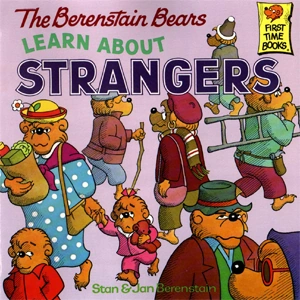
When we were little my sister and I began inadvertently collecting the Berenstain Bears books. It seems that someone gave us a couple of them as gifts and we soon learned that we loved the stories and the pictures. When we discovered the pictures on the back cover showing all the other Berenstain Bear books we made it our goal to own every single one. We never quite reached that goal, but we did collect a lot of them.
I recently purchased 2 of these books for Noah, 2 that I never had as a kid. In this book, Sister learns about strangers. She is a little too trusting and friendly and doesn't understand the concept of stranger danger. When brother tries to watch out for her by asking Papa to explain strangers, Sister takes his advice of caution a little too far. She begins to think that everyone in the world has ill intentions. Once she gets over her fears of strangers she returns to her friendly, out-going self, but tries a little harder to be aware of her surroundings.
This is a very easy, creative way to teach your own children about strangers and the way we should view them.
Caps for Sale

Slobodkina, Esphyr
If you're looking to teach prediction this text might be just what you need. The caps salesman in this book isn't having too much luck finding customers so he decides to take an afternoon nap in the shad of a tree. When he awakes he realizes that all of his caps are gone and he begins frantically searching for them.
I have to say, the first time I read this, I did not see the ending coming. This story will be especially enjoyed by your mischievous little students or children.
Stuck
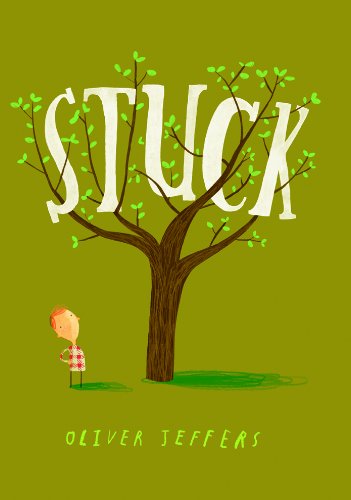
Jeffers, Oliver
This book is so ridiculous it is funny! Kids get caught up in the hilarious plot and can't help but want to guess what happens next.
I think many of us have probably had a real-life experience similar to what happens to the main character of this book. I've wondered if some specific situation gave the author his inspiration for this story.
The main character's kite gets stuck in a tree near his house one day. Naturally, thinking as only a little boy might, the best way to get the kite down is to throw other objects up in the tree. Alas! to no avail! The entire book is filled with pictures of all the objects (some incredibly outlandish) he hoists into the branches of this poor tree. It is all topped off by a ending you won't see coming. I'd recommend it for sure!
The Pigeon Wants a Puppy
Willems, Mo.
As in Don't let the Pigeon Drive the Bus!, the pigeon tries his best to be so convincing, only this time it is in order to gain himself a puppy. He creates a great argument for why he needs a puppy, but by the end of the book he realizes the flaws in his reasoning.
I love the subtleties of the cover pages in this book - buy it and check them out!
The Pigeon Wants a Hotdog

Willems, Mo.
Several months ago I posted another Mo Willems book called Don't let the Pigeon Drive the Bus! I recently learned of 2 more books from this same series and bought them for my classroom. They are just as funny as the first.
In this book the Pigeon finds a hot dog and is all set to enjoy eating it when a pesky little bird butts in and begins a game of 20 questions, all about the hot dog. The pigeon gets so frustrated with the bird, but, in the end, makes the right choice and decides to treat the bird like he would want to be treated. So simple. So cute. So funny.
Put Me In the Zoo
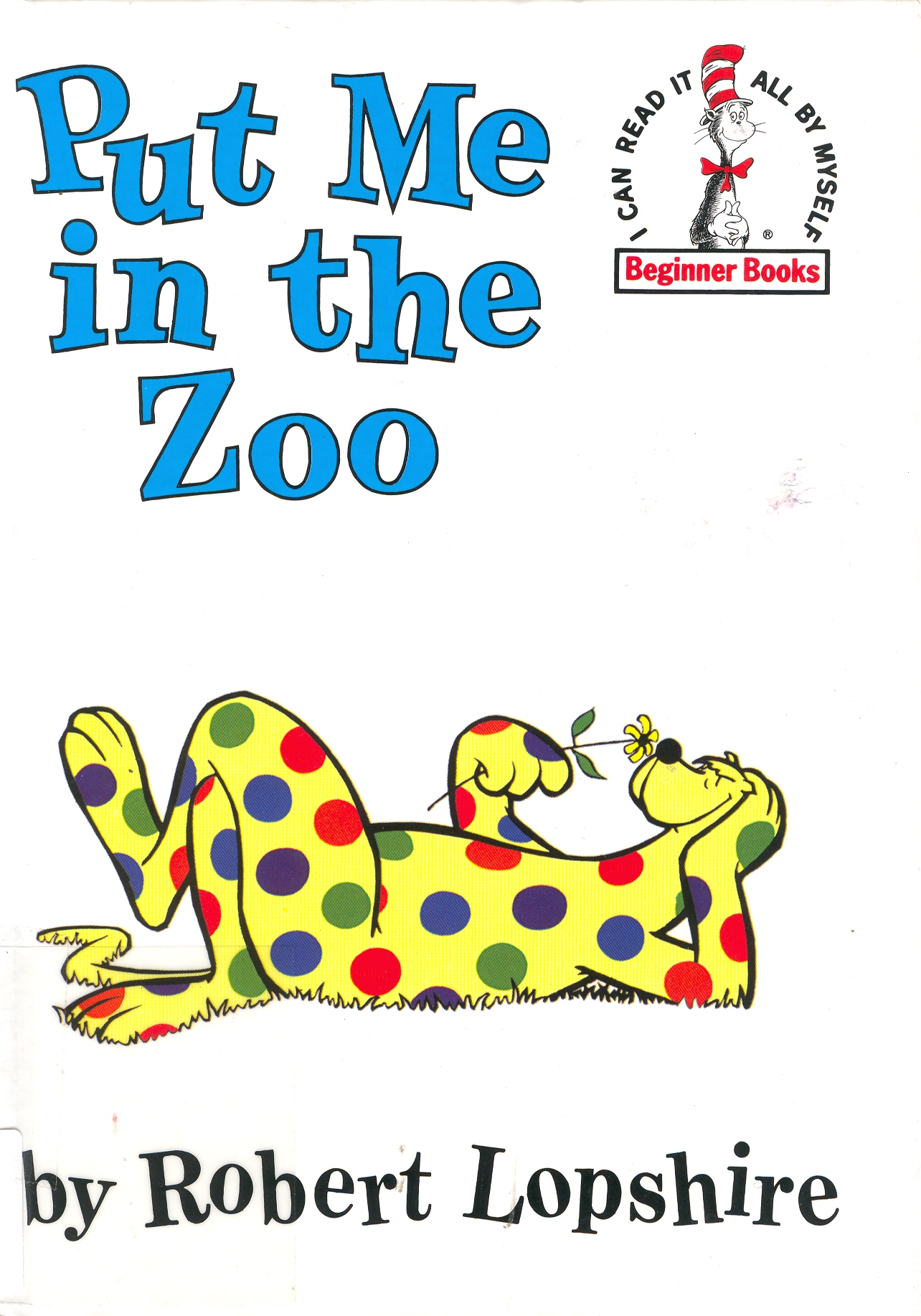
Lopshire, Robert
Recently I found myself growing incredibly tired of Noah's book selection. He has many to choose from, maybe even close to 100, but it seems that we read the same 10 or so over and over and over and over and over...ok, you get the point. To remedy my reading woes I went on Amazon and looked for some cheap books to add to our collection. I began to come across many of the books that I loved as a child and I couldn't help but take a little walk down nostalgia lane.
This book holds great memories of Grandma's house and reading for me. It is a simple, yet engaging story that can be used to teach colors and rhyming words. It will be something that Noah will be able to read himself shortly after learning to read.
The simple plot is about an animal who wants to be put in the zoo because of the special things he can do. Some kids talk him into going into the circus instead because of his special tricks by which they are amazed.
Are You My Mother?
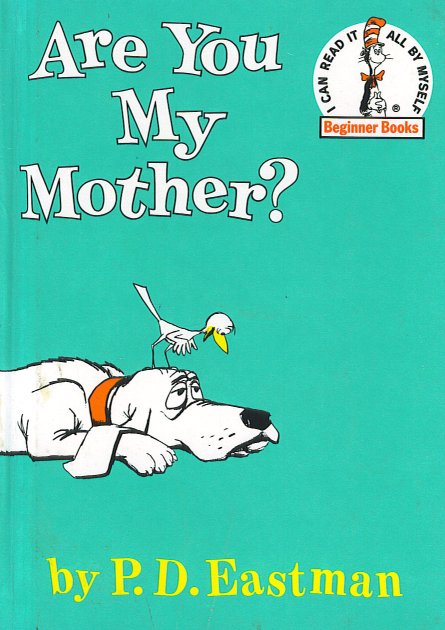
Eastman, P.D.
P.D. Eastman is as close to an author brother as you will ever find for Dr. Suess. The illustrations in their books are very similar, in my opinion and the stories are kind of alike as well, containing fun, rhyming words.
This heart-warming, simple story is about a little birdie who cannot find his mother. He goes on an adventure to reunite himself with her, but he's never seen her so he isn't exactly sure who he is looking for. Every animal he encounters hears the question, "Are you my mother?" At the very end, the bird is able to put 2-and-2 together and he figures out what his mother looks like.
If you're looking for an enjoyable read to connect to a craft, get this book and then search Pinterest - there are some great craft ideas on there to go along with this book.
Bears on Wheels
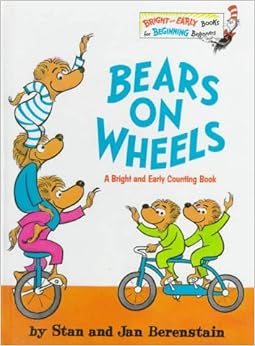
Berenstain, Stan and Jan
This book does not even really have a plot. It is a cute book for teaching beginning counting. This is a book that I used to read to my sisters when we would visit my Grandma's. A couple months ago we were at my Grandma's and she got this book out. She read it to Noah and he loved it, (he loves animals and kept saying, "Bears! Bears!). So, I just had to get it for him.
Baby Sister

dePaola, Tomie
If you read my last post you know I have some sort of obsession with the works of Tomie dePaola. I'm still uncertain whether it is his illustrations, his writing, or he himself that draws me in. In fact, when I was searching for a picture of the cover of this book I saw a picture of Tomie dePaola and it reminded me why I liked him in the first place. He just looks like a lovable, hug-able, friendly grandpa-type.
In this story Tommy's already large Italian family is growing even larger - his mom his having a baby. He desperately wants his mom to have a baby girl and he is adamant that she should wear a red ribbon in her hair. You have to wait until the end of the story to see if Tommy's wish comes true.
I actually read this book to my class this year to tell them that I was going to have a baby. They were so shocked and they all think that I need to have a baby girl and put a red ribbon in her hair...we'll have to see about that.
Subscribe to:
Posts (Atom)